
What am I doing
I’ve found myself falling further into tracking media over the years. It’s an easy-enough habit to pick up. Watch a movie? Give it a star rating and write a review. Play a video game? give it a star rating and write a review. Finish a book? Ooh, piece of candy. It’s a quick enough phone action and feels kind of nice. If I had to be introspective about it, I’m probably just doing it for the dopamine.
This probably all started with Delicious Library, a long-discontinued Mac app that helped you organize your collections of books, movies, music, and games. Like a lot of 2004 Mac apps, it looked pretty and let you sink lots of time into making very pretty digital bookshelves full of avatars of things you actually owned (or wanted to own).
I stopped using it sometime in the late 2000s, and if I tracked things at all, I used a journal or a spreadsheet (or spreadsheet-like-thing, like Airtable or Notion). I wrote about this a few years ago here (Notion & the Digital Shelf). But I’ve found over time it’s easier to use an app that specializes in a specific medium. And yet while these tracking sites all differ in the content they track, all of them look and feel very similar. They all seem to work like Letterboxd.
Letterboxd
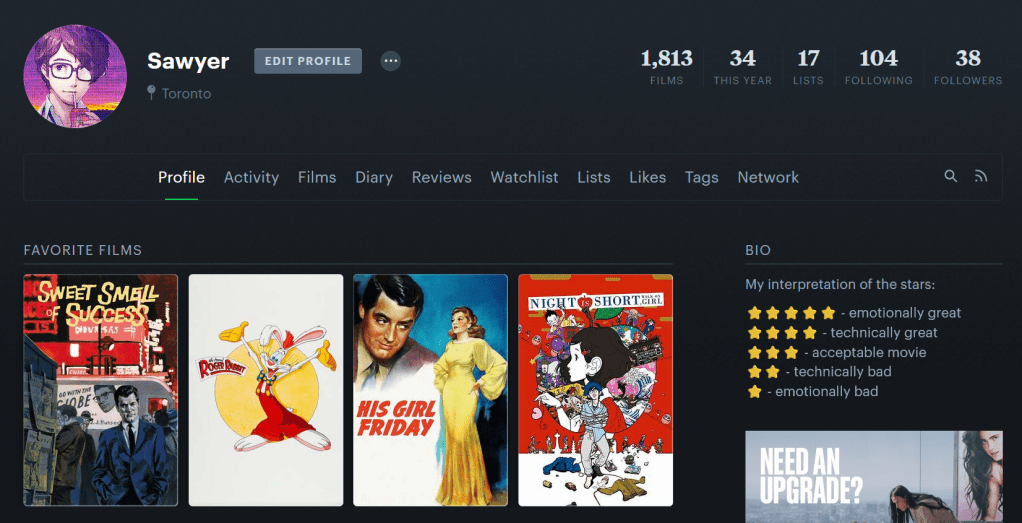
Letterboxd has become very popular in the last few years. It’s an extremely well-designed app that easily lets you go down rabbit holes about stuff you like. I’m not at all surprised it’s taken over as a blueprint for how to present a collection site.
I’ve been using it for nearly a decade. In writing up Letterboxd’s design decisions, I think I see why it’s so successful.
The Letterboxd Method
- The entire site is readable without an account, but you need an account to interact.
- Visually, it is a simple, formless dark-mode-only aesthetic that only shows movies and context about movies.
- Letterboxd pulls its data from a separate service, the TMDB.
- You can follow other users, but you can’t message them. Interaction between users only happens in the comments of reviews. Most people seem to be pretty positive (this is likely good moderation).
- You can’t add a movie that isn’t there, and you can’t delete movies that are, but you can rate, review, and make lists.
- You can add four movies to your profile, a feature that gives off nice MySpace vibes.
- Everything is a hyperlink, and hyperlinking leads to rabbit holes of time spent by the user.
- Speaking of links: you can’t watch movies on the app, but there are links to where you can. This is maybe the most useful set of buttons on the site.
- It’s easy and addictive to make and share lists.
- Gives you a “watchlist” that operates like a list, but gets its own button.
- Lets you easily rate something out of five stars (and also half stars, for sickos). The rating also marks the movie as seen.
- Using the site is free, but enthusiasts who want more data and would like to replace movie posters with their own can give Letterboxd $20 a year.
- Letterboxd is not owned by a larger company in the business, so it doesn’t have a conflict of interest in favouring one movie company over any others.
This success has changed the landscape of what a media tracker looks like. “What if Letterboxd for y” is a really good idea for a lot of things.
Backloggd
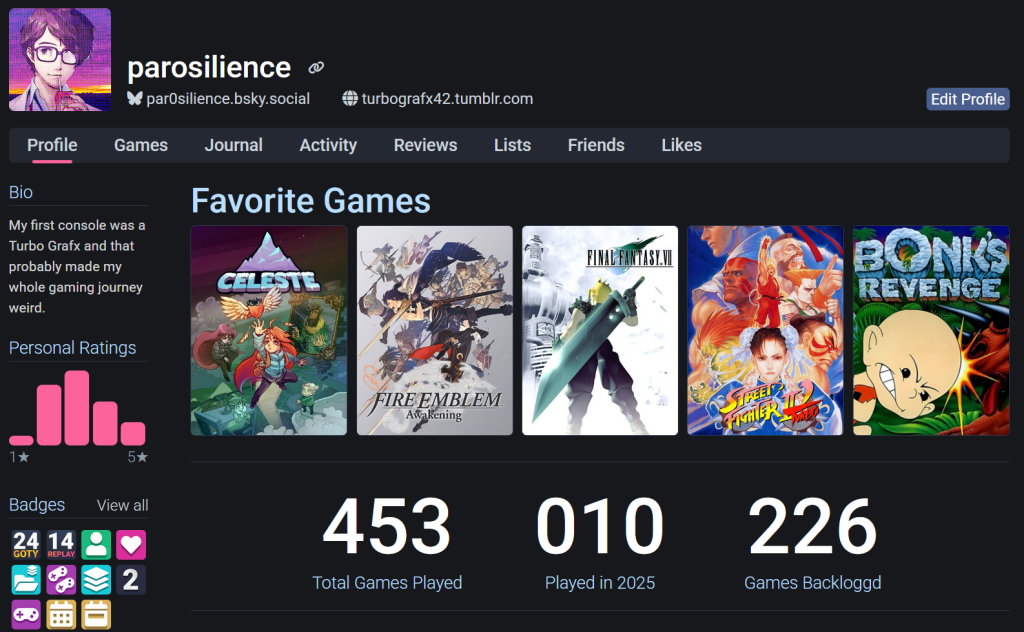
Backloggd has the same look and feel of Letterboxd, but has added a few features that make sense specifically for video games.
I love the journal feature of Backloggd, which encourages checking in after a gaming session and writing what you did. If you add time to each entry, Backloggd will add it up when you’re done to show your entire game time.
I use Backloggd’s lists features mainly to show games in each console I’ve owned, but I also keep a list of games I’ve played in specific years.
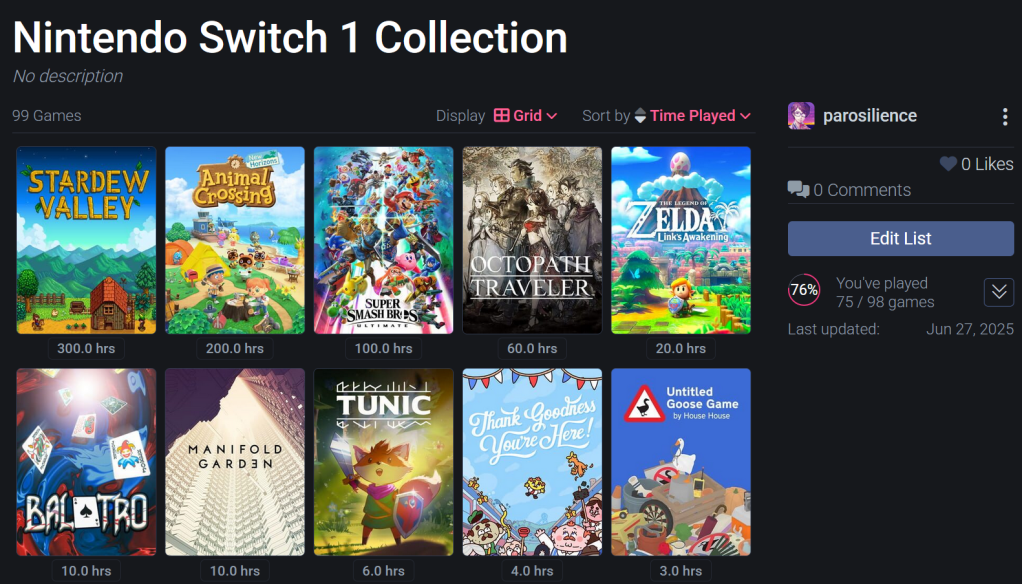
Most importantly, when I share a game recommendation to a friend, it’s usually a backloggd link that I’ll send.
The Story Graph
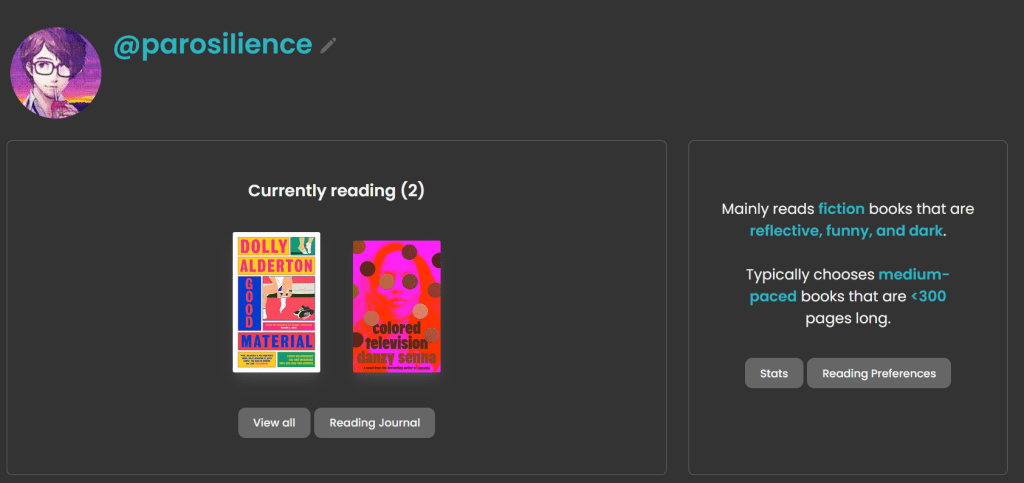
While the big player in reading tracking is Goodreads, I don’t use it. The StoryGraph is a much simpler, more Letterboxd-feeling reading tracker that’s not owned by a billionaire.
Similar to Backloggd, you can check in as you progress through a book, and it’ll track your beginning/ending dates. You can also check your reading stats at any time, and the app will give you some fun charts.
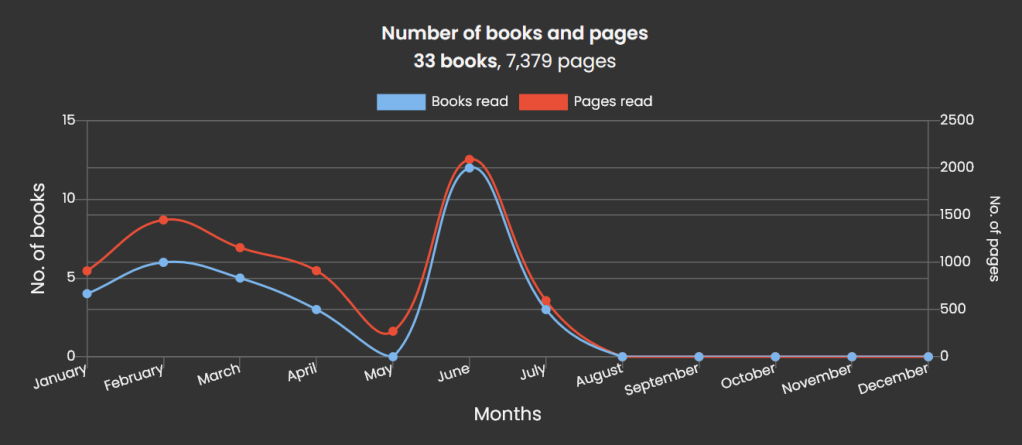
I also really like The StoryGraph’s review setup. You can write a review like any other site, but it encourages tagging (see image below). This is a clever way to generate search results and recommendations, but I also found it a fresh way to think about a book after I’m done.
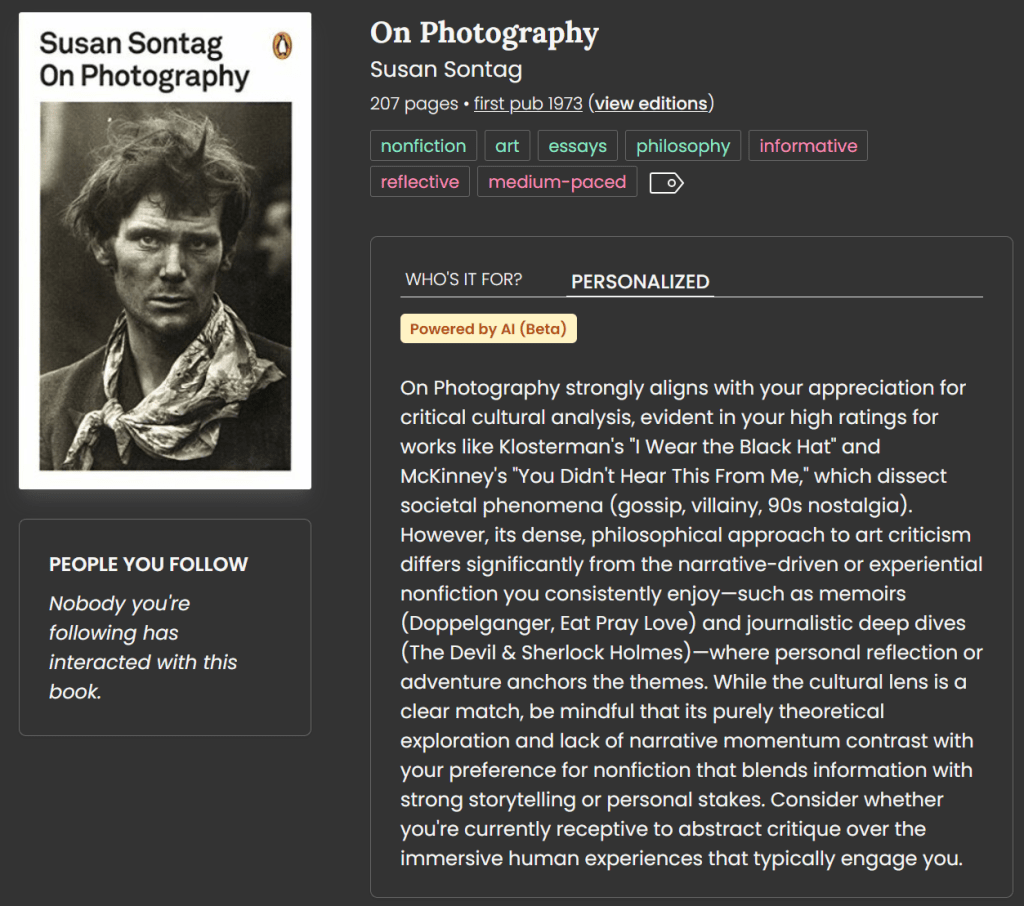
One thing I’m unsure about is the creep of AI features in the app. Many of the synopsis are AI-written. Each book also has a “personalized” AI prompt that will let you know if a book aligns with your reading history.
Trakt.TV
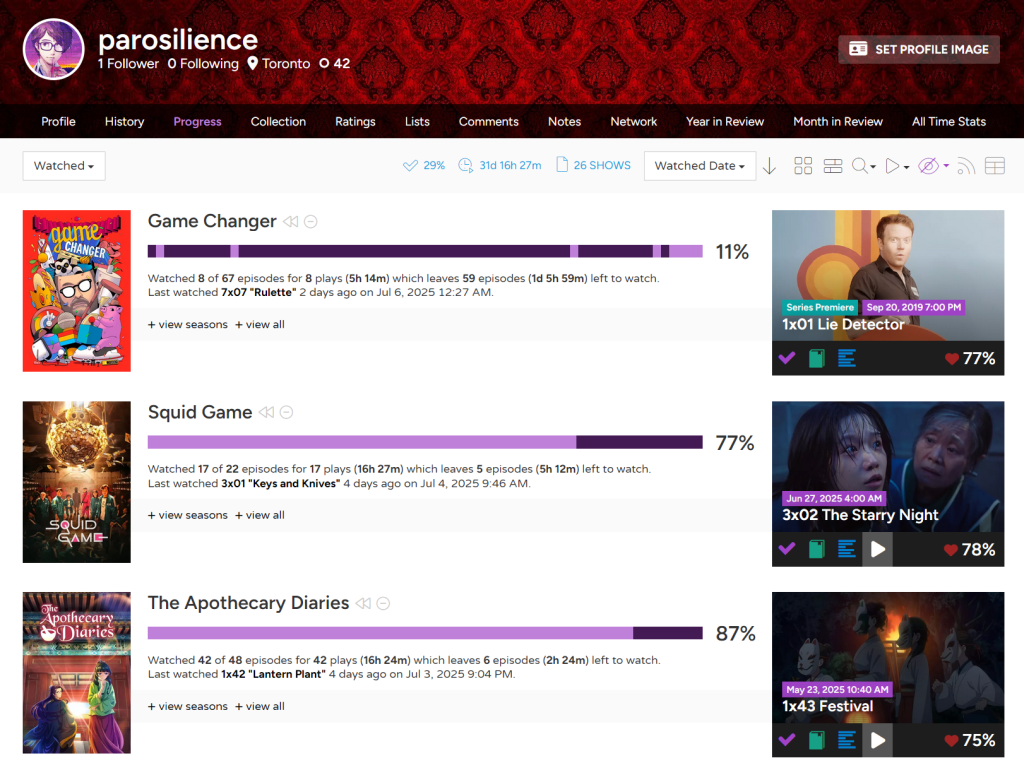
There are a lot of TV Trackers, but I keep returning to Trakt. There’s an emphasis on episode progression through a season that feels great in the app. Of all the tracking apps, I recommend people use one for TV because streaming can make it difficult to remember where all your shows actually are.
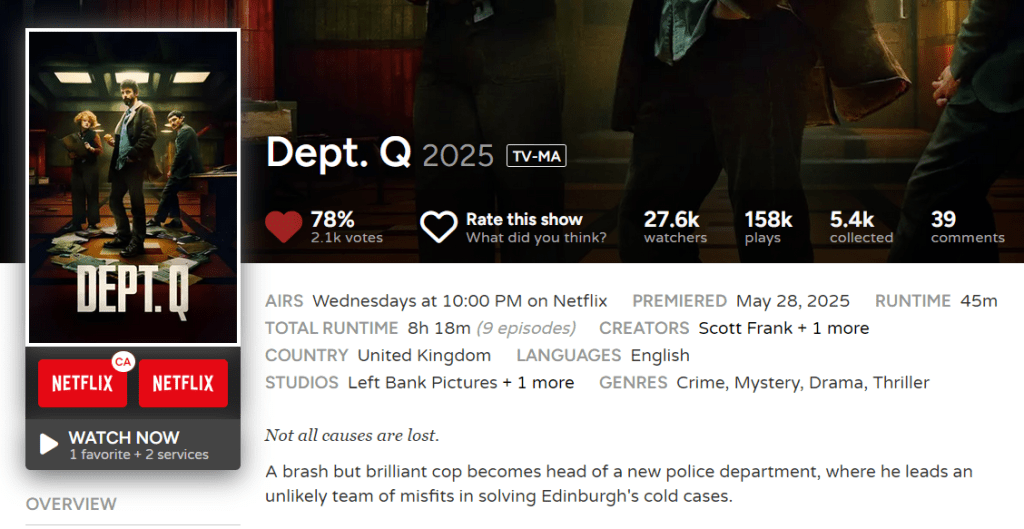
You can rate and review individual episodes, individual seasons, and the show overall. One thing I’d love to see is some kind of connection between all three. If I rate every episode, the season could give an average rating, and each season average could create a show average. At the time of this writing, that’s all manual work you have to do.
Trakt also encourages re-watching tracking as well, which can make the setup a little complicated for people just hoping to remember which app has what show. For that, JustWatch might be a better alternative.
Much like Letterboxd, Trakt has amazing filter searches (for example, search comedies released in 2023 on Britbox) and detailed fun charts, but they’re behind a paywall.
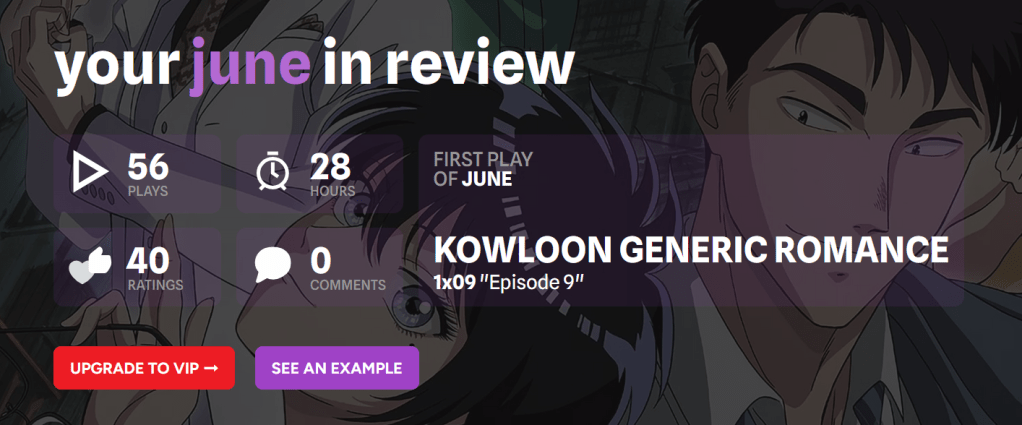
Dropkickd
Dropkickd is a brand new Letterboxd-like for tracking/rating wrestling shows and matches. If Letterboxd is the friendlier version of the Movie Database, Dropkickd is the friendlier version of Cagematch.
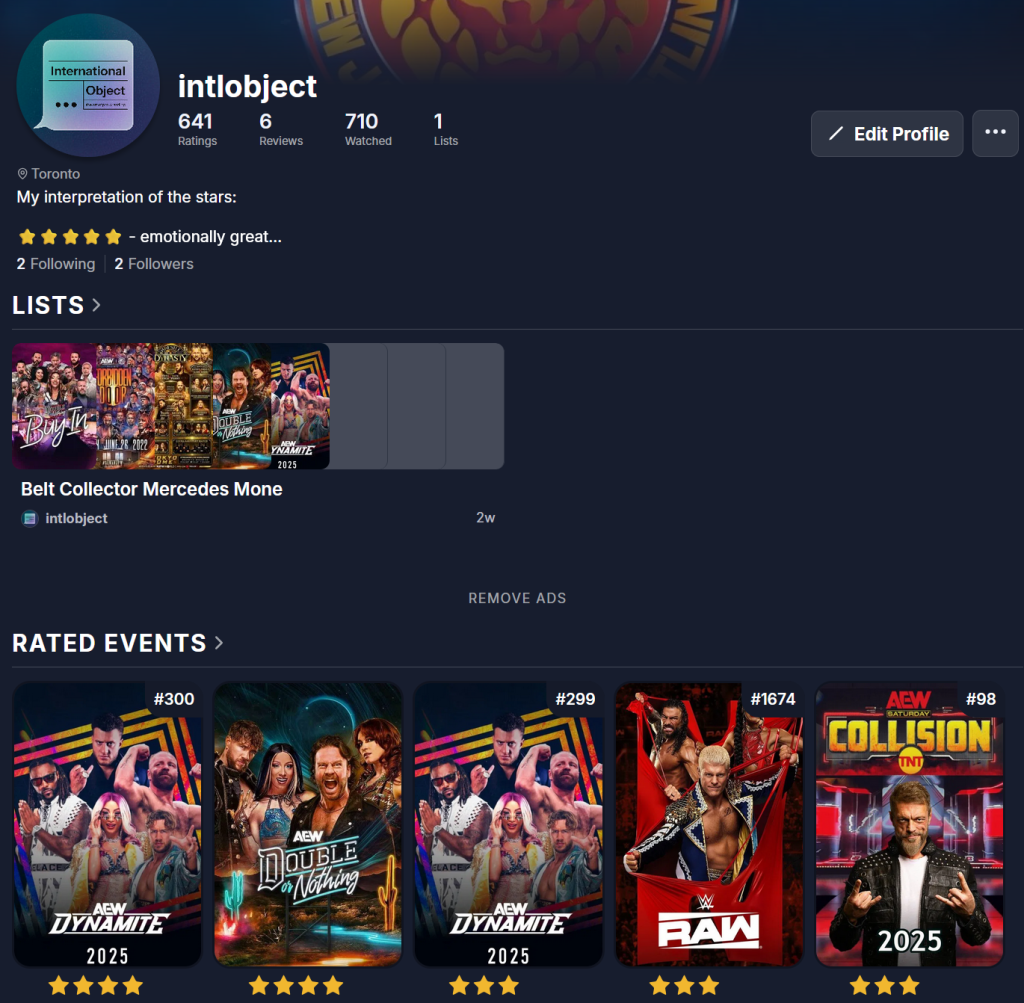
You can rate an individual show, and also individual matches in a show. Because it’s a brand new app, features and UI are still changing month-to-month. It’s cool to see something like this get built in real-time.
One wrestling-specific feature that I’m sure people love is the ability to rate in quarter stars. That doesn’t work for me, brother, but wrestling fans love to split a star into a million pieces.
If I had one major feature request, it would be to add a URL to where the wrestling show is available, much like how it works on these other Letterboxd-like apps.
Musicboard
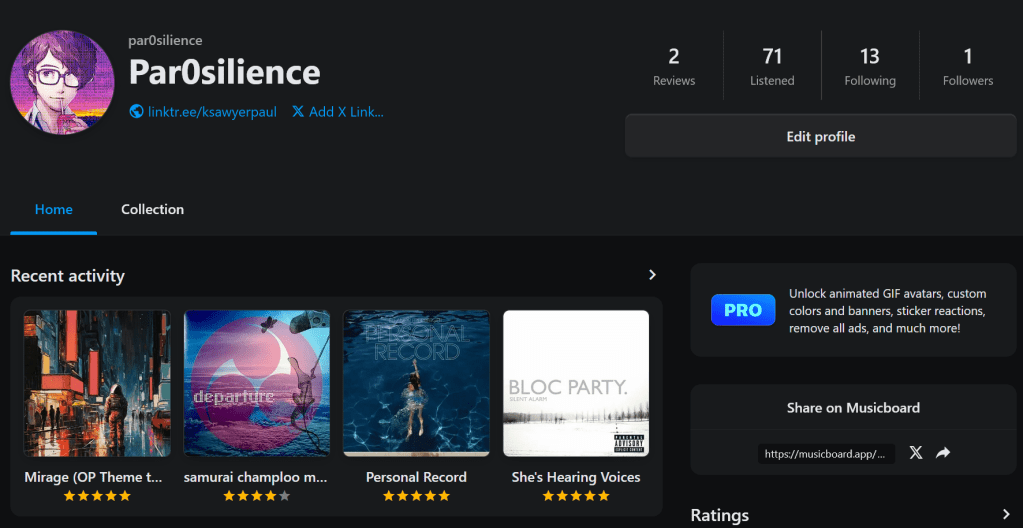
I’m new enough to Musicboard that I’ve barely scratched this site, but just like the others, you can build a collection and review albums. The site has a similar look and feel to Letterboxd, with a lot of emphasis on reviews and lists.
Much like how Trakt breaks a show into seasons and episodes, Musicboard breaks down an album into songs. And like Trakt, the album rating isn’t automatically by song ratings at all.
One thing that separates Musicboard from the rest is contextual interaction. If an album is missing a link to a streaming service, you can add it, and then everyone can use that link. So if you know the Apple Music link to an album but Musicboard doesn’t, you can help them out.
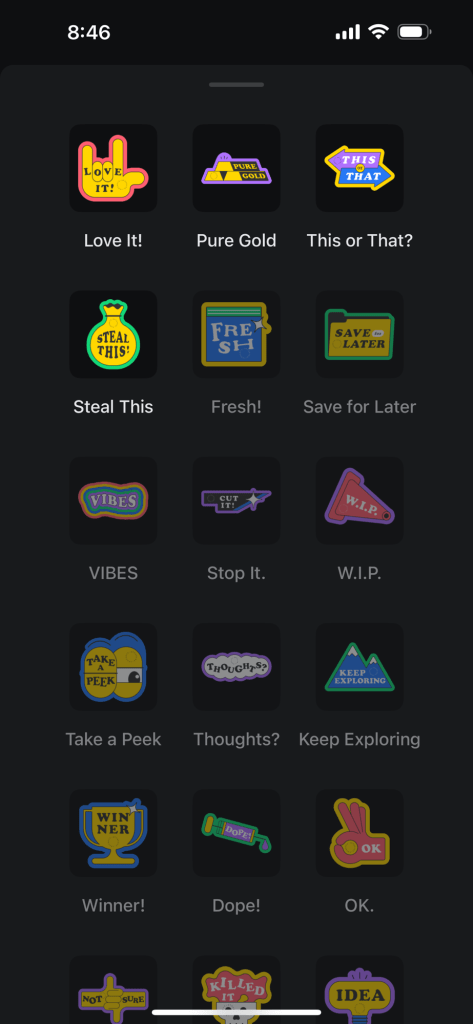
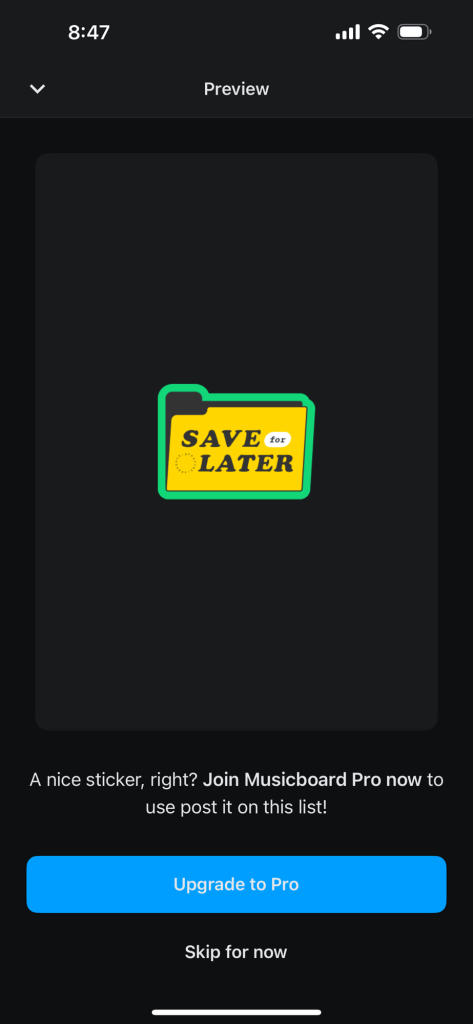
Musicboard has one very cool unique feature: you can not only like someone’s post or list, you can add a sticker of appreciation. This is one of those delightful pay-to-play features I find charming: the free tier only lets you use a couple of stickers. That’s how they get you.
My Personal Interpretation of Star Ratings
Using trackers and review sites makes you think about star ratings. It took me forever, but I’ve settled on a rating system that works for me across all mediums.
Here’s what my stars will always mean, no matter what the thing is:
⭐⭐⭐⭐⭐ – emotionally great
⭐⭐⭐⭐ – technically great
⭐⭐⭐ – acceptable
⭐⭐ – technically bad
⭐ – emotionally bad


Leave a comment